
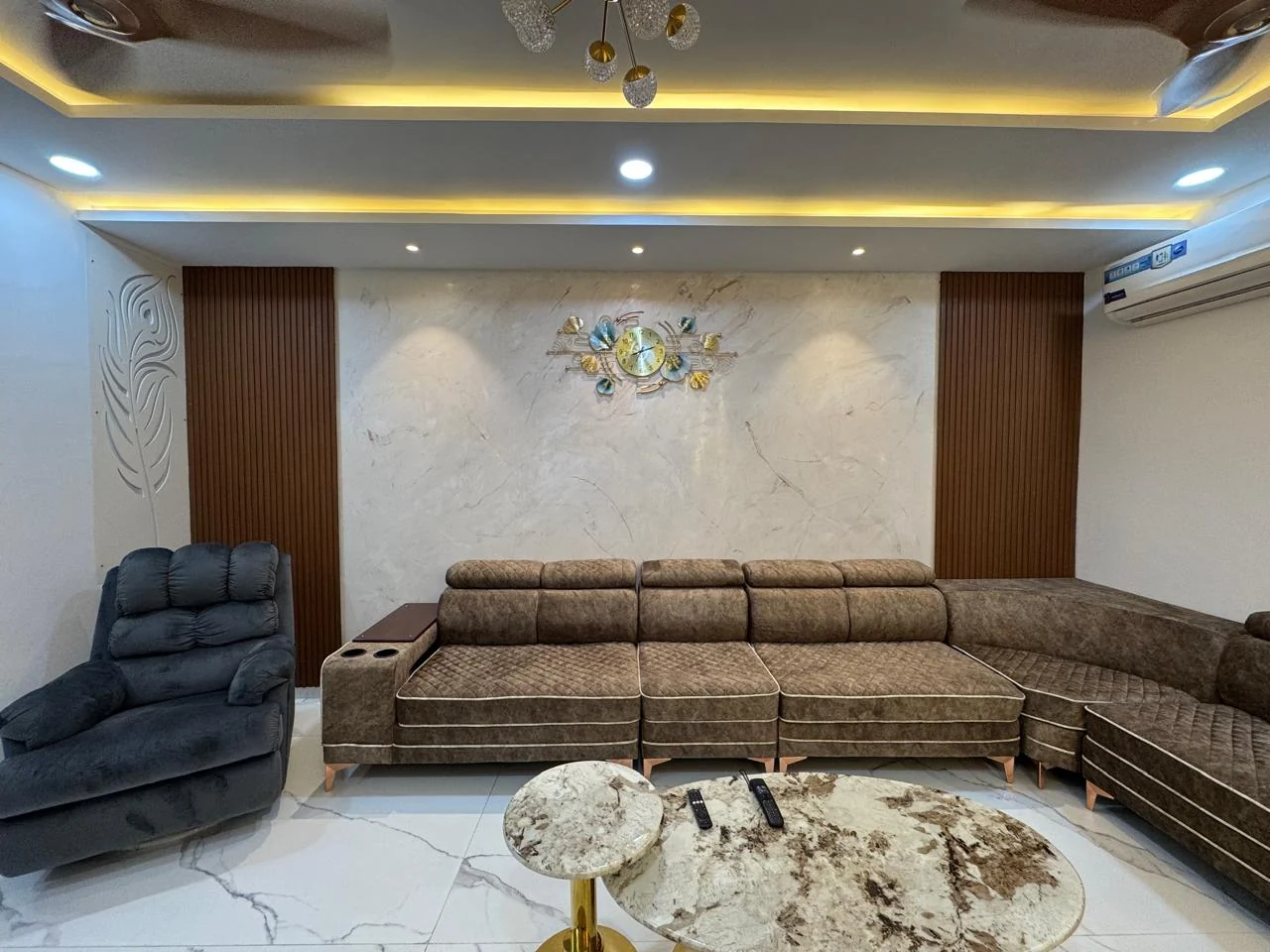
A modern Indian home is not a European apartment with different furniture. The way the space is used — the number of people it holds at a festival, the quantity of things stored in it, the intensity of the daylight — should be visible in the design.
1. Plan for the largest gathering, not the average evening
Most living rooms are furnished for four people and then asked to hold twenty twice a year. Design for flexibility: lighter occasional seating that can be moved, a console that can clear, floor seating that is comfortable rather than an afterthought.
2. Treat storage as an architectural element
Indian households store more than most. Rather than adding cupboards later, absorb storage into full-height joinery that reads as a wall. A continuous plane of storage is visually quieter than three separate units, and it holds considerably more.
3. Use jaali and fretwork with discipline
CNC-cut screens are one of the genuinely contemporary Indian design languages. They work when they are used once, at scale, and backlit — as a ceiling element or a single screen. They stop working when the same pattern appears on the ceiling, the wardrobe and the partition in the same room.
4. Respect the light you actually get
South and west-facing rooms in most Indian cities receive punishing afternoon light. Plan for layered window treatment: a sheer that filters without darkening, and a heavier layer behind it. Choose finishes that will not fade or yellow on the exposed side.
5. Choose finishes for hard water and heavy use
- Matte and textured shutter finishes hide water spotting far better than high gloss.
- Quartz and granite counters tolerate Indian kitchen use better than softer marbles.
- Anti-skid finishes in bathrooms and balconies are worth the small aesthetic compromise.
6. Design the pooja space deliberately
A pooja area added at the end always looks added at the end. Decide early whether it is a room, a niche or a unit, give it its own lighting circuit, and detail it with the same care as the kitchen.
7. Keep the palette warm
The current global default — cool greys and stark whites — often reads as cold in Indian daylight and worse under warm Indian lighting. Warm neutrals, timber tones, brass and stone hold up far better across the day and photograph better under evening light.
The underlying principle
Contemporary does not have to mean imported. The most convincing modern Indian interiors take a genuinely current material language and apply it to the way the household actually lives.